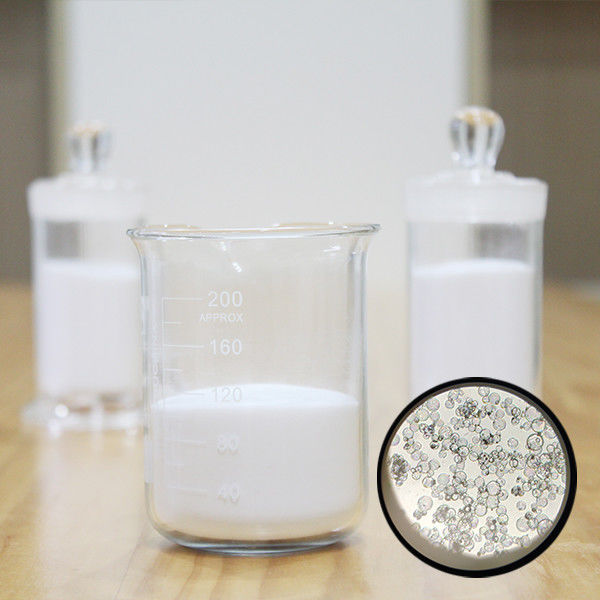
Descrizione del prodotto:
Le microsfere di vetro sono sfere microscopiche cave composte principalmente da una composizione chimica attentamente bilanciata che include SiO2, Na2O, CaO, MgO e Al2O3. Queste minuscole sfere hanno tipicamente un diametro compreso tra 20 e 75 micrometri, il che le rende una scelta eccezionale per una varietà di applicazioni industriali e scientifiche. La loro struttura e composizione uniche conferiscono loro proprietà notevoli che migliorano le prestazioni in numerosi prodotti.
La forma sferica delle microsfere di vetro è una caratteristica fondamentale che contribuisce alla loro versatilità ed efficacia. Questa geometria consente una distribuzione uniforme quando miscelate in compositi, rivestimenti o adesivi, portando a proprietà meccaniche migliorate e peso ridotto. La natura cava di queste sfere non solo riduce la densità, ma migliora anche la galleggiabilità e le capacità isolanti, rendendole ideali per componenti strutturali leggeri.
Una delle caratteristiche distintive di queste microsfere di vetro è la loro eccellente resistenza chimica. La composizione chimica, ricca di silice (SiO2) insieme a ossido di sodio (Na2O), ossido di calcio (CaO), ossido di magnesio (MgO) e ossido di alluminio (Al2O3), conferisce una buona resistenza alla maggior parte dei prodotti chimici. Ciò le rende altamente adatte per l'uso in ambienti chimici aggressivi in cui stabilità e durata sono fondamentali. Sia incorporate in rivestimenti, sigillanti o compositi, aiutano a proteggere il materiale ospite dal degrado chimico, prolungando la durata e l'affidabilità del prodotto finale.
In termini di resistenza meccanica, le microsfere di vetro mostrano un'impressionante resistenza alla compressione fino a 100 MPa. Questa elevata resistenza alla compressione garantisce che, quando utilizzate come riempitivi o agenti di rinforzo, possano sopportare pressioni significative senza collassare. Questa proprietà è particolarmente preziosa in applicazioni come calcestruzzo leggero, schiume sintattiche e altri materiali compositi in cui il mantenimento dell'integrità strutturale sotto carico è essenziale. La resistenza combinata con le caratteristiche di leggerezza aiuta gli ingegneri a progettare materiali che siano sia resistenti che efficienti.
L'intervallo di diametro da 20 a 75 micrometri offre flessibilità nella personalizzazione delle proprietà del prodotto finale. Diametri più piccoli possono migliorare la levigatezza della superficie e migliorare l'incastro meccanico all'interno dei compositi, mentre diametri più grandi contribuiscono in modo più significativo alla riduzione del peso e all'isolamento. Questa variazione di dimensioni consente a produttori e ricercatori di ottimizzare le prestazioni delle loro formulazioni in base a requisiti specifici.
Le microsfere di vetro sono ampiamente utilizzate in settori come aerospaziale, automobilistico, nautico, edilizio ed elettronico. Nei settori aerospaziale e automobilistico, contribuiscono alla riduzione del peso, che porta a un miglioramento dell'efficienza del carburante e a una riduzione delle emissioni. Nelle applicazioni marine, la loro resistenza chimica e galleggiabilità le rendono ideali per dispositivi di galleggiamento e rivestimenti resistenti alla corrosione. L'industria delle costruzioni beneficia delle loro proprietà isolanti e della capacità di ridurre la densità del materiale senza compromettere la resistenza, il che è vitale per materiali da costruzione a basso consumo energetico.
Inoltre, l'incorporazione di microsfere di vetro in compositi e polimeri migliora le proprietà di isolamento termico e di attenuazione del suono. La loro struttura sferica cava intrappola l'aria, fornendo una barriera efficace contro il trasferimento di calore e il rumore. Ciò li rende additivi preziosi nei pannelli isolanti per l'edilizia, negli interni automobilistici e negli involucri di dispositivi elettronici.
In sintesi, le microsfere di vetro con la loro forma sferica, eccellente resistenza chimica dovuta alla loro unica composizione chimica di SiO2, Na2O, CaO, MgO e Al2O3, un intervallo di diametro di 20-75 µm e un'elevata resistenza alla compressione fino a 100 MPa, presentano un materiale versatile e altamente funzionale. La loro capacità di ridurre il peso, migliorare la resistenza, fornire stabilità chimica e migliorare le proprietà isolanti li rende indispensabili nelle formulazioni di materiali avanzati. Sia che vengano utilizzate come riempitivi, rinforzi o additivi, queste microsfere svolgono un ruolo cruciale nel far progredire la tecnologia e nel migliorare le prestazioni e la durata dei prodotti moderni.
Caratteristiche:
-
Nome del prodotto: Microsfere di vetro
-
Spessore della parete: 1-2 micron
-
Intervallo di diametro: 20-75 µm
-
Resistenza alla compressione: fino a 100 MPa
-
Forma: Sferica
-
Conducibilità termica: 0,2 W/m·K
-
Contiene 2 parametri chiave di dimensione: spessore della parete e diametro
-
Lo spessore della parete varia tra 1 e 2 micron
-
Garantisce una forma sferica costante per uniformità
Parametri tecnici:
|
Forma
|
Sferica
|
|
Spessore della parete
|
1-2 micron
|
|
Densità reale
|
0,58-0,62
|
|
Colore
|
Bianco o avorio
|
|
Densità apparente
|
0,15-0,3 g/cm³
|
|
Conducibilità termica
|
0,05 W/m·K
|
|
Resistenza alla compressione
|
Fino a 100 MPa
|
|
Conduttività termica
|
0,2
|
|
Materiale
|
Vetro
|
|
Diametro
|
20-75 µm
|
Applicazioni:
Le microsfere di vetro sono materiali altamente versatili ampiamente utilizzati come riempitivi leggeri in varie applicazioni industriali. La loro unica struttura cava in vetro fornisce un eccellente rapporto resistenza-peso, rendendole ideali per la creazione di compositi che richiedono una densità ridotta senza compromettere l'integrità meccanica. Queste microsfere sono particolarmente preziose nelle schiume sintattiche, dove la loro dimensione uniforme e la qualità costante contribuiscono a prestazioni e durata migliorate.
Una delle principali occasioni di applicazione per le microsfere di vetro è nei materiali isolanti. Grazie alla loro bassa conducibilità termica di 0,2 W/m·K, offrono proprietà di isolamento termico superiori, rendendole adatte per l'uso in ambienti ad alta temperatura. Con una resistenza alla temperatura fino a 600°C, queste microsfere aiutano a mantenere la stabilità termica, garantendo sicurezza ed efficienza in scenari impegnativi come processi di produzione aerospaziale, automobilistico e industriale.
Nella produzione di compositi, le microsfere di vetro fungono da riempitivi essenziali che migliorano la resistenza alla compressione del prodotto finale, raggiungendo fino a 100 MPa. Ciò le rende particolarmente utili nei componenti strutturali leggeri in cui resistenza e durata sono fondamentali. La loro inclusione nelle schiume sintattiche migliora la galleggiabilità e la resistenza agli urti, il che è cruciale per applicazioni marine e subacquee, nonché nei materiali da costruzione leggeri.
Un altro scenario significativo per l'uso delle microsfere di vetro è nella produzione di calcestruzzo leggero e polimeri. Incorporando queste microsfere, i produttori possono ridurre il peso del materiale mantenendo o addirittura migliorando le caratteristiche prestazionali come la resistenza alla compressione e la resistenza termica. Questo equilibrio tra riduzione del peso e resistenza meccanica è essenziale nelle industrie che mirano all'efficienza energetica e alla sostenibilità.
Nel complesso, le occasioni e gli scenari di applicazione per le microsfere di vetro comprendono una vasta gamma di settori, tra cui aerospaziale, automobilistico, nautico, edilizio ed elettronico. La loro combinazione di proprietà leggere, resistenza alle alte temperature, bassa conducibilità termica e impressionante resistenza alla compressione li rende una scelta preferita per ingegneri e progettisti che mirano a migliorare le prestazioni del prodotto riducendo il peso. Che si tratti di isolamento, schiume sintattiche o materiali compositi, le microsfere di vetro forniscono soluzioni affidabili su misura per soddisfare condizioni operative impegnative.
FAQ:
D1: Cosa sono le microsfere di vetro?
R1: Le microsfere di vetro sono particelle sferiche minuscole e cave fatte di vetro. Sono utilizzate come riempitivi leggeri in compositi, rivestimenti e adesivi per ridurre la densità e migliorare le proprietà isolanti.
D2: Quali sono le applicazioni tipiche delle microsfere di vetro?
R2: Le microsfere di vetro sono comunemente utilizzate nei settori aerospaziale, automobilistico, nautico e delle costruzioni. Migliorano il rapporto resistenza-peso, l'isolamento termico e riducono i costi dei materiali in vari prodotti.
D3: Quali dimensioni e opzioni di densità sono disponibili per le microsfere di vetro?
R3: Le microsfere di vetro sono disponibili in una gamma di dimensioni, tipicamente da 10 a 100 micron di diametro, con densità fino a 0,1 g/cm³. Ciò consente la personalizzazione in base ai requisiti specifici dell'applicazione.
D4: Le microsfere di vetro sono chimicamente inerti e compatibili con diverse resine?
R4: Sì, le microsfere di vetro sono chimicamente inerti e mostrano un'eccellente compatibilità con resine epossidiche, poliestere, vinilestere e altri sistemi di resine, rendendole versatili per varie formulazioni.
D5: Come devono essere conservate le microsfere di vetro per mantenerne la qualità?
R5: Le microsfere di vetro devono essere conservate in un luogo fresco e asciutto, lontano dall'umidità e dalla luce solare diretta. Si raccomanda una corretta sigillatura dei contenitori per prevenire la contaminazione e mantenere le loro prestazioni.


 Il tuo messaggio deve contenere da 20 a 3000 caratteri!